APPLICATION-LED RFID/NFC PROJECT DEVELOPMENT

Custom RFID & NFC Solutions for Product and Packaging Integration

Not every RFID or NFC project begins with a standard label specification.

Xiangmai works with brands, product manufacturers, packaging manufacturers and solution providers on custom RFID/NFC projects where the final component, dimensions, construction, placement or data requirements still need to be evaluated.

A project may involve integrating RFID or NFC into a buyer-defined product, packaging structure, printed component or other suitable application.

The development process starts with the actual application and required function. Component selection, antenna configuration, physical construction, placement, encoding and production requirements can then be evaluated before a prototype specification is confirmed.
Request Prototype Evaluation
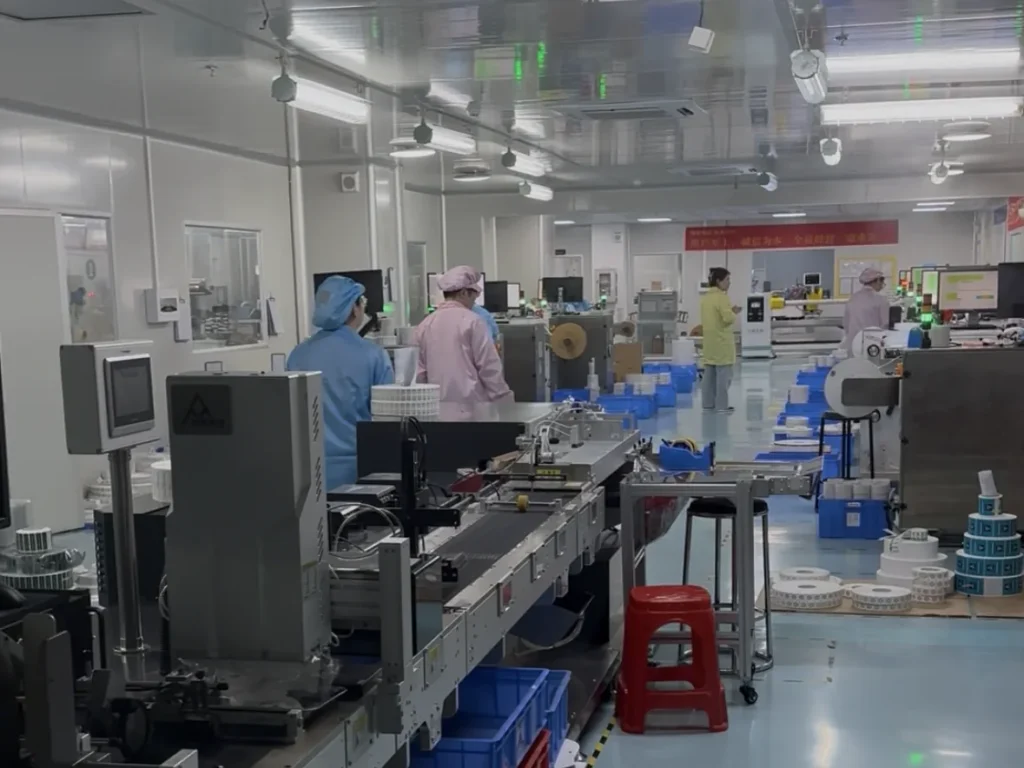
RFID NFC chip embedding equipment at Xiangmai factory

Custom RFID/NFC Projects Beyond Standard Labels

A standard RFID label, NFC label or inlay is not always the correct starting point.

Custom evaluation may be appropriate when:

  • Available installation space is limited
  • A specific finished shape is required
  • RFID/NFC must be integrated inside another product
  • RFID/NFC must be incorporated into a packaging component
  • The antenna position is constrained by the product design
  • Nearby materials may affect RF or NFC performance
  • The component must fit an existing production process
  • Printed and encoded information must be coordinated
  • The buyer requires unique data
  • A tamper-related physical structure is being considered
  • The buyer has a performance objective but has not selected the component
  • Existing standard products do not match the application

The purpose of the custom-development process is to define a manufacturable configuration that can be evaluated in the actual application.

It should not be assumed that every requirement can be solved by changing only the chip or antenna size.

Start with the Application, Not the Chip

For many custom projects, selecting a chip before understanding the application can lead to unnecessary redesign.

A more useful starting point is to define:

  • What the product is
  • What the packaging structure is
  • Where RFID/NFC must be positioned
  • What the RFID/NFC function should support
  • Who or what will read the RFID/NFC component
  • What data is required
  • What materials are close to the antenna
  • What physical space is available
  • Whether the component will bend, fold or move
  • Whether the product will be opened, cut or removed
  • How the finished component will be assembled
  • How the buyer will evaluate success

From this information, the technical items requiring confirmation can be identified.

Where the buyer already has a chip, protocol, antenna or technical specification, it can be reviewed as part of the project requirements rather than automatically replaced.

RFID/NFC Integration into Products and Packaging

Custom projects may require an RFID/NFC component to become part of another physical product or packaging structure rather than remain a standalone label.

Depending on the application, integration may be evaluated for:

  • Printed packaging components
  • Folding cartons
  • Rigid packaging
  • Product inserts
  • Cards
  • Hang tags
  • Labels
  • Silicone or TPU components
  • Plastic components
  • Other suitable buyer-defined structures

The correct integration method depends on the actual product construction and manufacturing sequence.

Relevant factors may include available internal space, surface shape, product and packaging materials, adhesive or lamination layers, bending or folding, assembly sequence, antenna orientation, nearby metal or liquid, user interaction position and downstream manufacturing requirements.

Final suitability should be evaluated using the actual or representative product structure.

For projects specifically focused on NFC integrated into complete packaging, see NFC Smart Packaging.

Custom Size, Shape and Construction

Custom RFID/NFC projects may require dimensions or physical structures that differ from standard finished labels.

Project evaluation may consider:

  • Available antenna area
  • Overall component dimensions
  • Finished shape
  • Product cavity or installation area
  • Face material requirements
  • Substrate requirements
  • Adhesive requirements
  • Protective layers
  • Printed layers
  • Lamination requirements
  • Die-cut requirements
  • Roll, sheet or individual-piece format
  • Final assembly method

The finished dimensions cannot always be determined from the external product size alone.

The antenna, chip position, surrounding material and required manufacturing tolerances must also be considered.

Exact materials, thickness, adhesive system, dimensional tolerances and construction should be confirmed for the specific project.

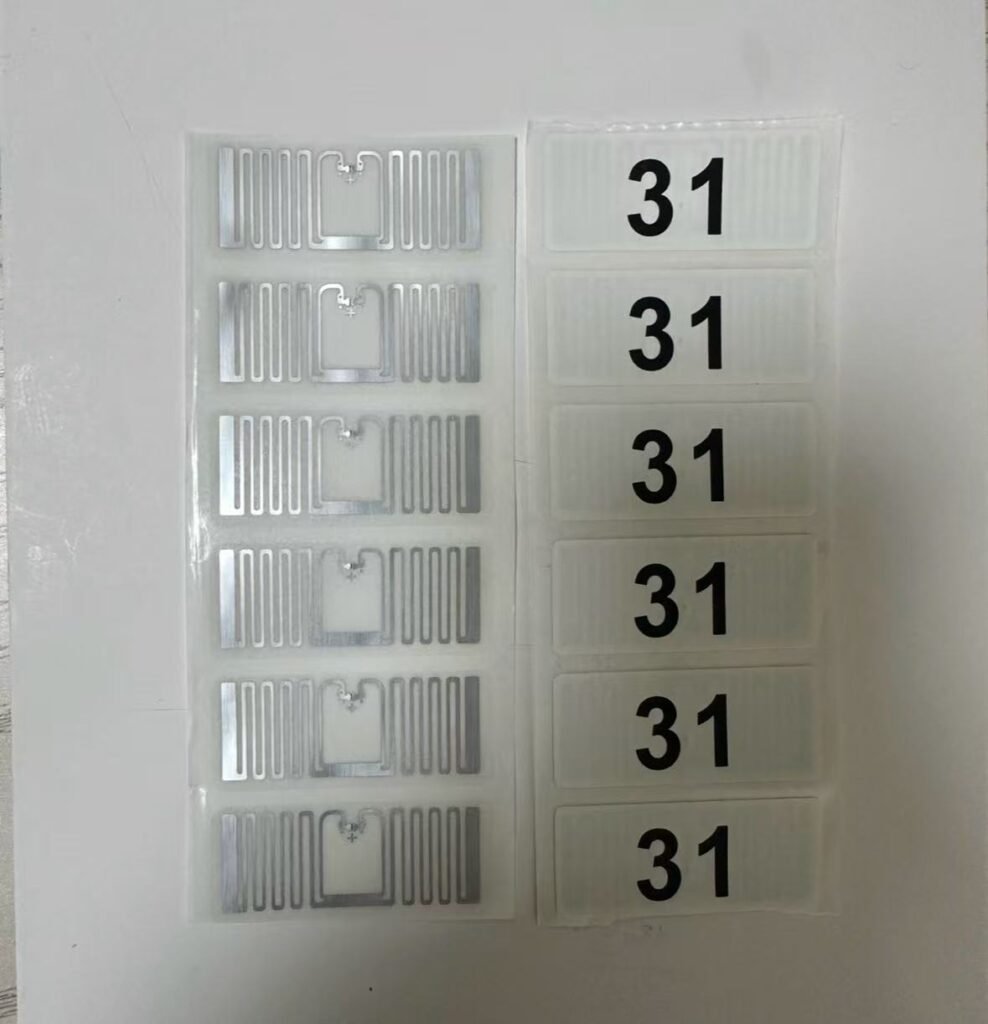
Finished RFID labels manufactured by Xiangmai

Component, Antenna and Placement Evaluation

RFID/NFC performance depends on the relationship between the electronic component and the final product environment.

Relevant technical factors may include:

  • Intended RFID/NFC function
  • Frequency or protocol requirement where already defined
  • Reader or smartphone environment
  • Available antenna area
  • Antenna geometry
  • Product material
  • Packaging material
  • Component placement
  • Antenna orientation
  • Nearby conductive material
  • Nearby metal
  • Nearby liquid
  • Distance from surrounding components
  • Folding or bending
  • Required data
  • Memory requirement
  • Security requirement where applicable

A specific chip, antenna or inlay should not be selected only because it is commonly used in another product.

The configuration should be evaluated against the intended application.

For buyers who already require a functional RFID/NFC component for their own converting or integration, see RFID/NFC Inlay Manufacturing.

Printing, Encoding and Variable Data

A custom RFID/NFC project may also require printed and electronic information to work together.

Depending on the approved specification, project requirements may include:

  • Printed product information
  • Serial numbers
  • Barcodes
  • QR codes
  • Buyer-defined variable information
  • RFID/NFC encoding
  • Unique encoded data
  • Serialized data
  • Printed/encoded data matching
  • Production-data records

Where variable or encoded data is required, the buyer should define the required relationship between the physical product, printed identifier and RFID/NFC data.

  1. Source-data format
  2. Printed fields
  3. Encoded fields
  4. Unique-data rules
  5. Matching rules
  6. Duplicate-data rules
  7. Rejected-data handling
  8. Required production report
  9. Verification scope

Specific chip-memory operations, UID/EPC handling, passwords, locking, security functions or cryptographic features remain subject to technical confirmation for the selected component.

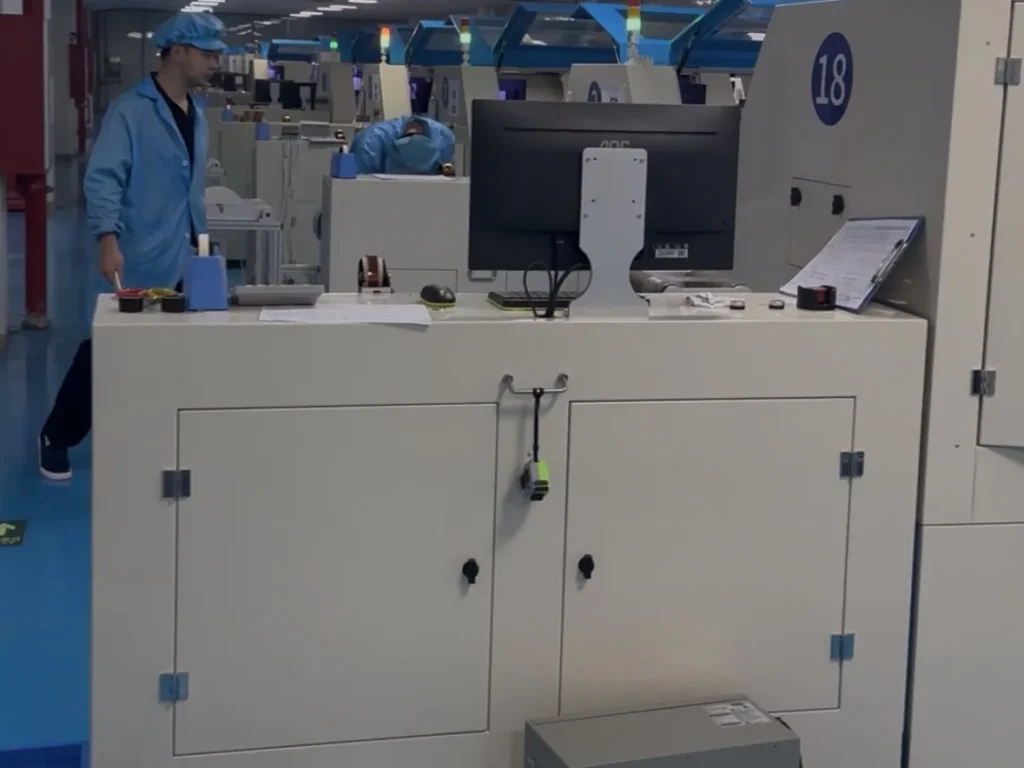
RFID NFC encoding workstation at Xiangmai factory

Prototype Development and Application Testing

Prototype evaluation is an important stage for non-standard RFID/NFC projects.

A prototype allows the proposed physical and electronic configuration to be evaluated before mass-production requirements are fixed.

1. Physical Fit

Confirm whether the proposed component fits the available product or packaging space.

2. Placement

Evaluate whether the antenna can be positioned appropriately within the product structure.

3. Assembly

Review whether the component can be integrated into the buyer’s intended manufacturing or assembly process.

4. RFID/NFC Interaction

Evaluate the proposed configuration in the intended reader, smartphone or application environment.

5. Product Environment

Test the effect of the actual or representative materials surrounding the RFID/NFC component.

6. Data

Confirm the required encoding, serialization or printed/encoded relationship where applicable.

7. Construction

Review the proposed dimensions, material layers, adhesive or converting requirements.

8. Production Specification

Record the configuration approved for subsequent manufacturing.

Prototype success in one test environment should not automatically be interpreted as a universal performance guarantee for every product, reader, smartphone or operating condition.

Custom RFID/NFC Project Examples

The following examples illustrate the types of applications that may require custom evaluation. They are application categories rather than fixed technical specifications.

RFID/NFC Embedded into a Product Component

A buyer may need an RFID/NFC component positioned inside a molded, laminated, printed or assembled product component.

The project should define the available space, surrounding materials, assembly method and intended reading environment before the final configuration is selected.

NFC Integrated into Packaging

A brand or packaging manufacturer may require NFC to be positioned inside or behind a packaging component rather than applied as a visible finished label.

The packaging structure and intended smartphone interaction should be reviewed before prototype approval.

Custom Label or Inlay Dimensions

A buyer may have a restricted application area that requires evaluation of a non-standard finished size or antenna configuration.

The available physical space alone does not guarantee that a particular antenna can provide the required performance.

Tamper-Related RFID/NFC Structure

A project may require the antenna or circuit to interact with an opening, cutting, tearing or removal point.

The required physical behavior and electronic response should be defined and tested using the actual proposed construction.

A specific “cut = no signal” or similar result must not be assumed without project-specific prototype validation.

Serialized Product Identification

A project may require printed identifiers and RFID/NFC data to be coordinated across individual units.

The source data, uniqueness rules, matching logic and verification requirements should be agreed before production.

Inspection and Production Preparation

Once a custom configuration has been evaluated, production requirements should be documented before mass manufacturing.

Depending on the project, the approved specification may define:

  • Component or inlay
  • Antenna configuration
  • Finished dimensions
  • Construction
  • Material requirements
  • Placement
  • Artwork
  • Variable printed data
  • Encoded data
  • Printed/encoded matching
  • Inspection requirements
  • Finished format
  • Packing requirements

Inspection may include relevant checks such as:

  • Physical appearance
  • Finished dimensions
  • RFID/NFC response
  • Encoded-data verification
  • Variable-data verification
  • Printed/encoded relationship
  • Construction
  • Packing

The exact inspection method, sampling level and acceptance criteria should be agreed for the specific project.

Custom RFID/NFC Development Process

  1. Application review
  2. Product or packaging structure review
  3. RFID/NFC functional requirement review
  4. Component and antenna evaluation
  5. Placement and construction evaluation
  6. Data requirement review
  7. Prototype specification
  8. Prototype production
  9. Buyer application testing
  10. Technical feedback
  11. Specification adjustment where required
  12. Production specification approval
  13. Manufacturing
  14. Encoding or variable-data processing where required
  15. Inspection
  16. Packing

Xiangmai’s RFID/NFC manufacturing capability includes inlay-related production, converting, encoding, inspection and integration with printed products.

For additional production information, see RFID/NFC Manufacturing Capability.

Information Required for Project Evaluation

For a custom RFID/NFC project, provide as much of the following information as possible:

  • Product or packaging description and intended RFID/NFC function
  • Target market
  • Product and packaging materials
  • Photos and drawings, if available
  • Available installation area
  • Required finished dimensions and shape, if fixed
  • Proposed component position
  • Nearby metal or liquid
  • Bending or folding conditions
  • Assembly method
  • Reader type or smartphone requirement, if known
  • Required frequency, protocol or chip, if already defined
  • Memory or security requirement, if applicable
  • URL, data, encoding and unique-data requirements
  • Printed variable-data and printed/encoded matching requirements
  • Tamper-related requirement and expected opening/cutting/removal behavior, if applicable
  • Sample quantity and estimated production quantity
  • Packing requirement and project timeline

A completed 3D drawing is not always necessary for an initial discussion.

If the design is still being developed, provide the available dimensions, photos, sketches, product materials and intended RFID/NFC function. The missing technical items can then be identified for further evaluation.

Start with Your Application

Provide the application information you already have. The technical items requiring confirmation can then be identified before prototype development.

Send Your Application Requirements

Custom RFID/NFC Solutions FAQ

No. If the chip has not yet been selected, provide the intended application, available space, product materials, reading environment and required function. The component requirements can then be evaluated as part of the project.

Not necessarily. An initial evaluation can begin from available dimensions, photographs, sketches, materials and the intended RFID/NFC function. More detailed drawings may be required later depending on the project.

RFID/NFC integration can be evaluated for suitable product structures. The available space, surrounding materials, antenna placement, assembly process and reading environment should be reviewed before the configuration is confirmed.

Suitable integration may be evaluated for silicone or TPU components. The component dimensions, antenna position, surrounding materials, product geometry and intended smartphone interaction should be tested for the actual application before mass production.

A non-standard antenna or inlay requirement can be evaluated according to the application, available area, frequency/protocol requirements and expected performance. A specific custom antenna should not be promised until technical feasibility is confirmed.

This may be possible with a suitable application-specific antenna/circuit design and placement. The required physical action and electronic response must be evaluated and prototype-tested for the actual construction.

Projects requiring unique or serialized encoded data can be evaluated according to the selected RFID/NFC component and approved data specification. The uniqueness rules, source data and verification scope should be defined before production.

Printed and encoded information can be coordinated when the source data, matching rules and required verification scope are defined before production.

This page covers physical RFID/NFC development, manufacturing and approved encoding/data-production processes. Websites, cloud platforms, databases, applications, APIs and software integrations should be defined separately and are not automatically included.

The prototype should be tested in the actual or representative product using the intended reader, smartphone or application environment. The final specification should be approved based on the relevant project testing rather than assumed from component specifications alone.

Technical feedback from prototype testing can be used to evaluate whether the component, antenna, placement, construction or other project parameters should be adjusted before the production specification is approved.

Request Prototype Evaluation

Share your application, product or packaging structure, available dimensions, materials, intended RFID/NFC function, reader or smartphone environment, data requirements, sample quantity and estimated production quantity with the Xiangmai team.

If you do not yet know the correct chip, antenna, inlay or physical construction, provide the application information you already have.

The project can then be reviewed to identify the technical items that require confirmation before prototype development.

Request Prototype Evaluation Discuss Your Custom RFID/NFC Project