COMPONENT PROCUREMENT FOR DOWNSTREAM INTEGRATION

RFID & NFC Inlay Manufacturer

Xiangmai manufactures custom RFID and NFC inlays for converters, packaging manufacturers, solution providers and product developers that require RFID/NFC components for further integration.

Projects can be evaluated according to the required application, available integration area, RFID or NFC system requirements, antenna format, chip specification, converting requirements, encoding requirements and final product environment.

Because RFID and NFC performance depends on the complete product and operating environment, component selection and performance requirements should be confirmed according to the specific project before mass production.

Send Your Inlay Specification
RFID and NFC wet inlay manufacturer

Custom RFID and NFC Inlays for Product Integration

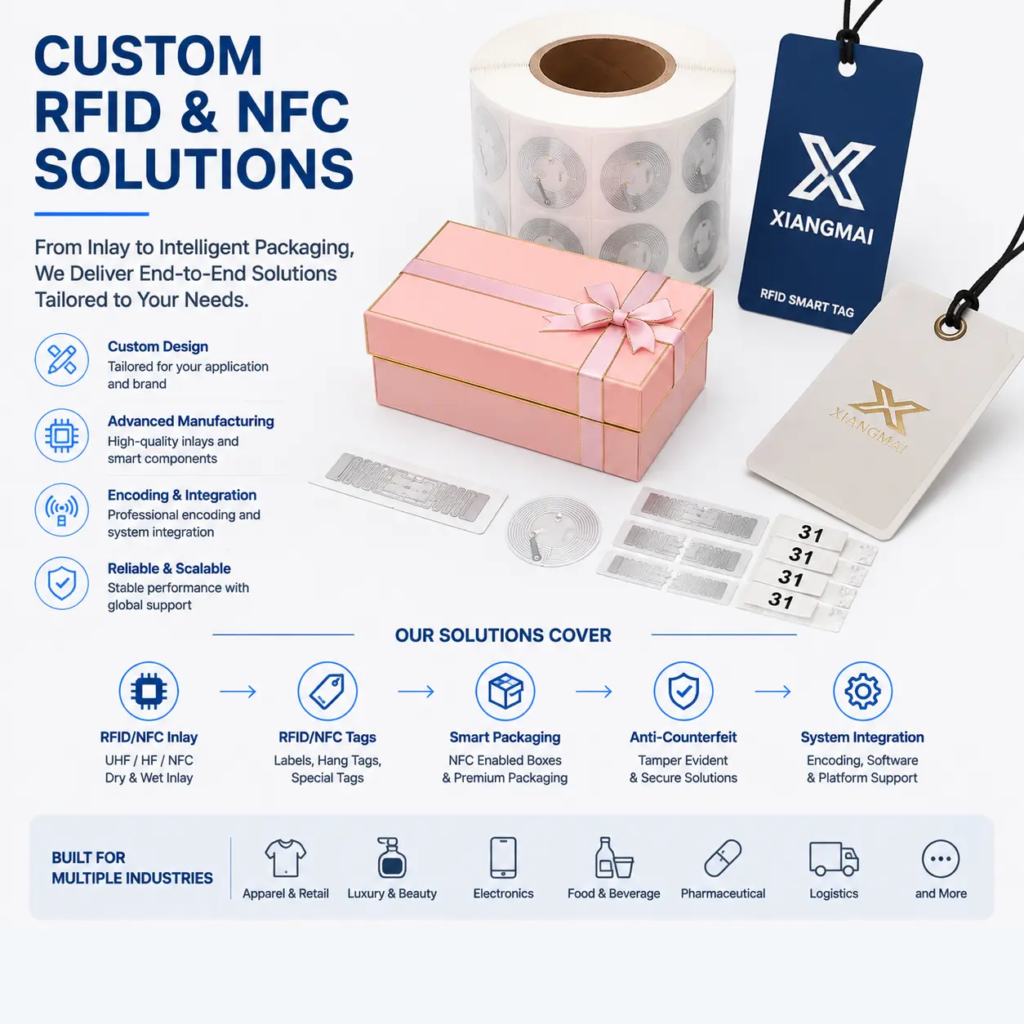
RFID and NFC inlays provide the functional RFID/NFC component that can later be converted or integrated into a finished label, hang tag, packaging structure or other smart product.

Depending on the project, Xiangmai can evaluate inlay requirements for label converters, packaging manufacturers, RFID/NFC solution providers, apparel tag manufacturers, smart-packaging manufacturers, product manufacturers and brand technical teams.

The appropriate inlay depends on the final product rather than only the RFID/NFC component itself. Before production, the buyer and manufacturer should establish the intended application, physical integration requirements and known RFID/NFC system specifications.

For buyers requiring a finished RFID label rather than an inlay component, see RFID Labels & Tags.

Typical Buyers

  • Label and tag converters
  • Packaging manufacturers
  • RFID/NFC solution providers
  • Smart-product manufacturers
  • Technical procurement teams

RFID/NFC Inlay Construction Options

An RFID/NFC inlay generally combines an antenna structure with an RFID/NFC chip and supporting substrate or converting structure. The exact construction should be selected according to the buyer’s downstream converting or integration process.

Project evaluation may involve the required inlay format, finished and antenna dimensions, available integration area, substrate, adhesive and liner requirements where applicable, pitch, roll configuration, downstream converting method, final product construction and packing requirements.

Specific materials, adhesive systems, liner specifications, tolerances and roll configurations should be confirmed for each project.

Dry and Converted Inlay Requirements

Different buyers may require different stages of RFID/NFC component preparation depending on their downstream process. One converter may require a component intended for its own label-converting process, while another buyer may require additional converting before integration into a finished product.

The required construction should therefore be defined from the buyer’s actual production process rather than assumed from a generic inlay description.

Selecting the RFID or NFC Component

Component selection should begin with the intended application and existing system requirements.

Relevant factors may include the RFID or NFC application, target market, operating environment, existing reader or smartphone requirements, available antenna area, product material, placement, required data, encoding and memory requirements, final converting process and packing or handling environment.

Technical Confirmation

Where the buyer already has a defined frequency, protocol or chip requirement, that information should be supplied for technical review.

Where the component has not yet been selected, the known application and system information should be reviewed before a specific configuration is confirmed.

Specific chip models, frequencies, protocols, memory configurations and security functions remain subject to project confirmation.

Custom Antenna and Inlay Requirements

The physical size of an RFID/NFC inlay is not the only factor affecting its suitability. The antenna and overall inlay construction must fit the available product area while also being evaluated for the intended RFID/NFC environment.

Project review may consider available antenna area, required outer dimensions and shape, product structure, placement, folding or bending, nearby materials, metal or conductive components, final enclosure, adhesive or lamination layers, integration method and reader or smartphone interaction.

A smaller inlay should not automatically be assumed to provide the same performance as a larger design. Where size is restricted, prototype testing can help determine whether the proposed configuration is suitable for the intended product.

Encoding and Data Requirements

Where required by the project, RFID/NFC components may be prepared with encoded data according to an approved specification and the capabilities of the selected component.

Possible project requirements may involve buyer-defined data, serialized data, URL or other approved NFC content, RFID identification data, or data associated with a buyer-defined product record.

The exact encoding structure must be confirmed before production. Specific EPC structures, UID/TID handling, memory allocation, password functions, locking or other chip-level operations should not be assumed unless technically reviewed and approved for the selected component.

Production Data and Traceability Requirements

Where buyers require production data to correspond with individual RFID/NFC components, they should define the source-data format, encoded fields, unique-data rules, matching requirements, duplicate-data rules, rejected-data handling, required production report and verification scope.

The relationship between the encoded identity and the buyer’s external database, software platform or product system normally remains buyer- or solution-provider defined unless separately agreed.

Applications for RFID and NFC Inlays

RFID and NFC inlays can be incorporated into many finished products depending on the selected technology and project requirements.

RFID Labels and Tags

RFID inlays may be converted into finished labels or tags for buyer-defined identification, inventory, logistics or retail applications.

RFID Smart Hang Tags

An RFID component can be incorporated into a printed hang-tag structure for apparel, footwear or other retail merchandise. See RFID Smart Hang Tags.

NFC Smart Packaging

NFC components can be integrated into suitable packaging structures for connected-product, product-information, interaction or authentication-related applications. See NFC Smart Packaging.

Embedded Smart Products

RFID or NFC components may be evaluated for integration inside technically suitable products. Final suitability must be evaluated for the specific product.

Performance and Integration Environment

RFID/NFC performance depends on more than the chip or antenna alone.

Relevant factors may include frequency and protocol, chip, antenna design and dimensions, inlay construction, product material, placement, distance from the product surface, nearby metal or liquids, conductive materials, folding or bending, lamination and adhesive layers, reader type, smartphone model where applicable, reader antenna configuration, orientation and the final operating environment.

Test in the Final Environment

Fixed read distance, smartphone performance, bulk-reading speed or accuracy should not be assumed from an inlay specification alone.

Where performance is important to project approval, samples should be evaluated in the buyer’s actual or representative final product and intended reading environment.

Inspection and Verification

RFID/NFC inlay production may include inspection and verification according to the approved project requirements.

Depending on the project, the inspection scope may include physical appearance, inlay construction, RFID/NFC response, encoded-data verification, variable-data verification where applicable, finished dimensions, roll or sheet preparation and packing requirements.

The exact inspection method, sampling level and verification scope should be agreed according to the project. No universal inspection percentage, read accuracy or performance guarantee should be assumed unless specifically confirmed.

Sample and Prototype Evaluation

Sampling is recommended when a buyer needs to confirm physical integration, RFID/NFC performance, encoding or downstream converting requirements before mass production.

1. Application Review

Confirm what the component will be integrated into and what function it is expected to support.

2. Technical Review

Review known frequency, protocol, chip, memory, antenna area and reader requirements.

3. Product Structure

Confirm integration area, material, placement, nearby materials and physical limitations.

4. Data Review

Confirm encoding, serialization or other buyer-defined data requirements.

5. Prototype Specification

Define the proposed component configuration for sampling.

6. Sample Production

Prepare samples according to the confirmed prototype specification.

7. Buyer Testing

Test samples in the intended final product and reader or smartphone environment.

8. Specification Approval

Confirm construction, component, dimensions, data, converting and inspection requirements before mass production.

Sample quantity, cost and lead time should be confirmed according to the specific project.

RFID/NFC Inlay Manufacturing Process

  1. Application and specification review
  2. RFID/NFC component evaluation
  3. Antenna/inlay requirement confirmation
  4. Production preparation
  5. Chip attachment and inlay-related production
  6. Converting or laminating where required
  7. Encoding where required
  8. Inspection and verification
  9. Roll, sheet or other approved finished preparation
  10. Packing according to the confirmed requirement

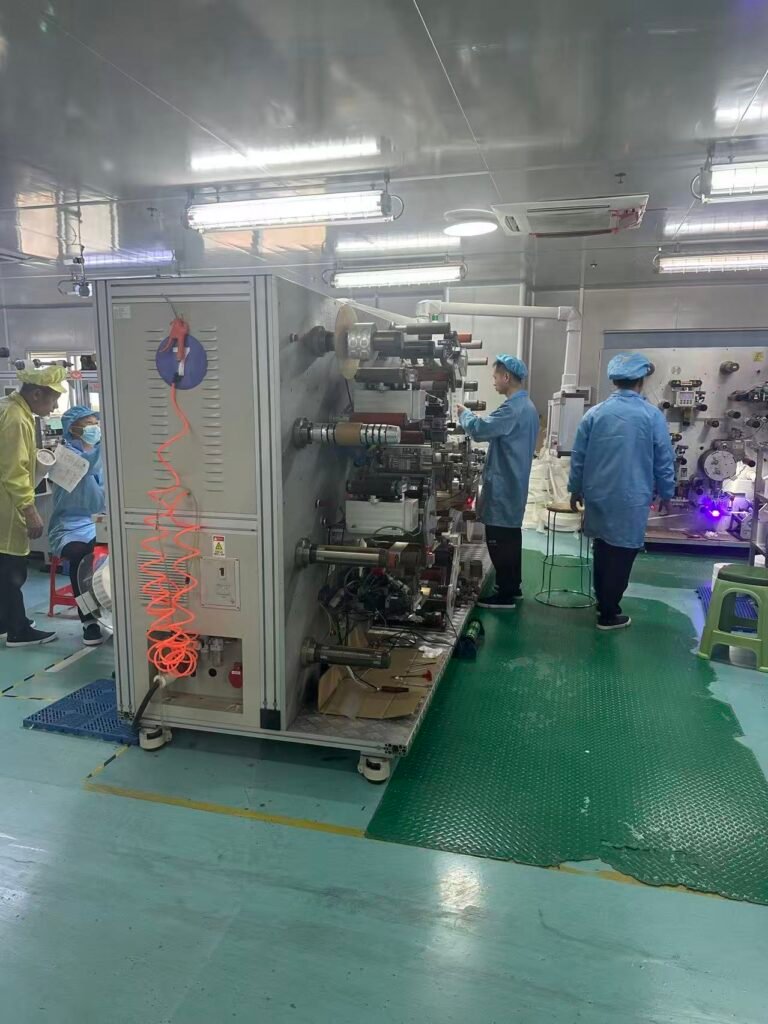
Xiangmai’s broader RFID/NFC manufacturing capability includes chip-related inlay production, converting, encoding, inspection and integration with printed packaging products.

For additional production information, see RFID/NFC Manufacturing Capability.

RFID and NFC inlay manufacturing production facility
RFID NFC smart label production and quality inspection

Information Required for Quotation

For an efficient RFID/NFC inlay evaluation, provide as much of the following information as possible:

  • Intended application, final product and target market
  • RFID or NFC requirement
  • Frequency, protocol, chip or memory requirement if already specified
  • Existing reader or smartphone requirement if applicable
  • Required inlay dimensions, available antenna area and shape
  • Product material, integration position and nearby metal, liquid or conductive materials
  • Construction, adhesive, liner, roll, sheet, pitch or converting requirements where applicable
  • Encoding, variable or serialized data, and data-report requirements
  • Sample and estimated production quantities
  • Packing requirements and project timeline

If some technical specifications have not yet been defined, provide the intended application, product structure and known system information instead of estimating the missing parameters.

Ready for Technical Review?

Send the information currently available. Undecided technical items can be identified before sampling.

Send Your Inlay Specification

RFID & NFC Inlay FAQ

An RFID/NFC inlay is a component that combines a chip and antenna structure for integration into a finished label, tag, packaging structure or other compatible product. The final construction depends on the intended application and downstream converting process.
An inlay is primarily the RFID/NFC functional component used for further converting or integration. A finished label normally adds the required face material, adhesive, printing, converting or other construction needed for the final application.
Project-specific dimensions and antenna requirements can be evaluated according to the available integration area and intended application. Final feasibility and performance should be confirmed through technical review and, where appropriate, sampling.
A component can be evaluated from the intended application, required system, available antenna area, data requirements and operating environment. A specific chip should not be selected only from the product name or dimensions.
Encoding requirements such as buyer-defined URLs, serialized information or other approved data may be evaluated according to the selected NFC component and project specification. The exact data structure and required verification should be confirmed before production.
Where a project requires a relationship between individual components and production data, the required fields, matching rules and report format should be defined before production. The exact deliverable remains project-specific.
There is no single read distance applicable to every RFID inlay. Performance depends on the frequency, chip, antenna, product material, placement, reader configuration and final operating environment. Project-specific testing is recommended.
Suitability depends on the NFC component, available antenna area, product material, placement, nearby conductive materials and final product structure. Samples should be evaluated inside the intended product where integration performance is important.
Yes. Sampling can be used to evaluate physical dimensions, integration, encoding and RFID/NFC performance before production. Sample quantity, cost, lead time and evaluation requirements should be confirmed for each project.

Send Your Inlay Specification

Share your intended application, product structure, available integration area, known RFID/NFC specifications, dimensions, encoding requirements, sample quantity and estimated production quantity with the Xiangmai team.

If the frequency, protocol, chip or antenna configuration has not yet been finalized, provide the known product and system requirements. The technical items requiring further evaluation can then be identified before sampling.

Send Your Inlay Specification Request RFID/NFC Inlay Samples Discuss Your Inlay Project